

Who hasn't taken a trip to the harbour, for a fish auction at their vacation destination, or early in the morning to get fish fresh out of the water? Fish, shellfish and crustaceans are the stars of summer dishes.
You've probably already seen it on food packaging: a small logo made up of the letters A to E, on a gradient of green, yellow and orange. What does this Nutri-Score mean? And what's its purpose?
What is the Nutri-Score?
It's a 5-letter, 5-color nutritional logoThis label is found on the packaging of processed food products and beverages. Unprocessed products, i.e. all fresh produce such as fruit, vegetables, fish, meat, etc., are not affected, nor are alcoholic beverages.
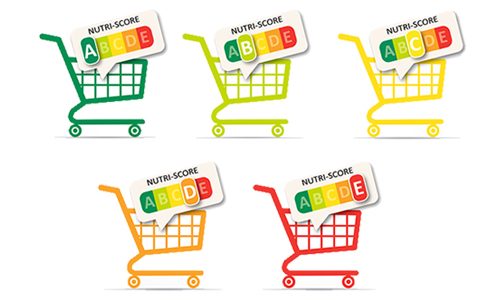
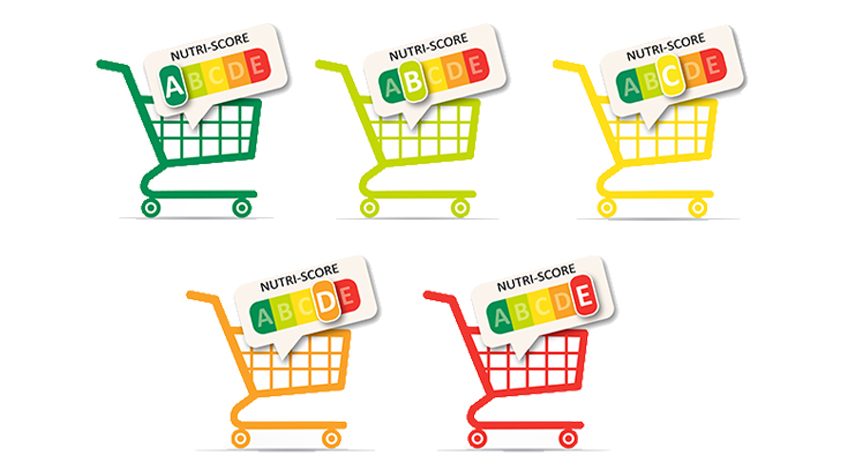
The Nutri-Score is used to provide information on the nutritional quality of products. This labeling takes the form of a 5-color scale used to classify products:
- the letter A in dark green for products of the highest nutritional quality,
- the letter E in dark orange for products of lower nutritional quality.
However, the Nutri-Score is not mandatory. Food companies and retailers are free to choose whether or not to display the logo on their packaging.
How is a product's score calculated?
It is determined on a 100g portion of product according to :
- of the share of nutrients and healthy foods fiber, protein, fruits and vegetables,
- of the share of nutrients that are detrimental to health when they are in excess: energy, saturated fatty acids, sugars, salt.
The resulting score is then translated into a letter and a color.
What's it for?
The aim of the Nutri-Score is tohelp consumers choose products with better nutritional qualities when they go shopping.
On the one hand, it makes it possible to compare the nutritional quality of the same product according to brand. For example, lasagne bolognese sold in supermarkets may be graded A, B, C or even D, depending on the manufacturer.
On the other hand, it also helps to guide consumers in their choice of different products in the same aisle, for example among the many different types of cereal on offer, which may be of totally different quality, and to help them make the right choice. have both an A and an E score.
What about pesticides and additives?
Only nutritional aspects are taken into account in calculating the Nutri-Score, which does not include additives or pesticides. There is no score that takes these elements into account. On the other hand, you'll find another logo on the shelves that complements the Nutri-Score, bearing the wording "AB", which identifies products from organic farming.
If you can, we recommend that you choose foods without additives or containing as few as possible. To do this, checkez the list of ingredients for commercial products, which must include additives.
Depending on your availability, we advise you to cook your own food whenever possible, and to avoid over-consumption of ultra-processed products, as not all products are Nutri-Score-certified. So, as soon as that you can "do it yourself"!
In conclusionBut don't forget that eating well also means taking the environment into account. But don't forget that eating well also means taking the environment into account, by favoring seasonal foods, foods from local producers and, if you can, organic foods.




 English
  French