Who hasn't taken a trip to the harbour, for a fish auction at their vacation destination, or early in the morning to get fish fresh out of the water? Fish, shellfish and crustaceans are the stars of summer dishes.
The nutritional benefits of proteins
Proteins, essential for our health
Proteins are one of the three major macronutrient families, along with carbohydrates and fats. They are the main components of food that contribute to the energy supply the body needs.
They are composed of long chains of amino acids, some of which can be produced by the body and others are called "essential" because they cannot be synthesized by the human body and must therefore be obtained from the diet. This is why it is important to meet your protein needs to ensure a sufficient intake of these amino acids.
Why do we need protein?
Proteins have several important roles in:
– the building and maintenance of our bones, muscles, skin, hair, nails, body hair, and cell membranes,
- the synthesis and action of our hormones and enzymes necessary for our digestion and metabolism, our neurotransmitters, and our antibodies that protect against bacterial infections,
– the transport of oxygen in the body (hemoglobin) and substances like iron, triglycerides, cholesterol, medications,
- maintaining oncotic pressure, blood clotting, the immune system...
Where are dietary proteins found?
They can be of animal or plant origin.
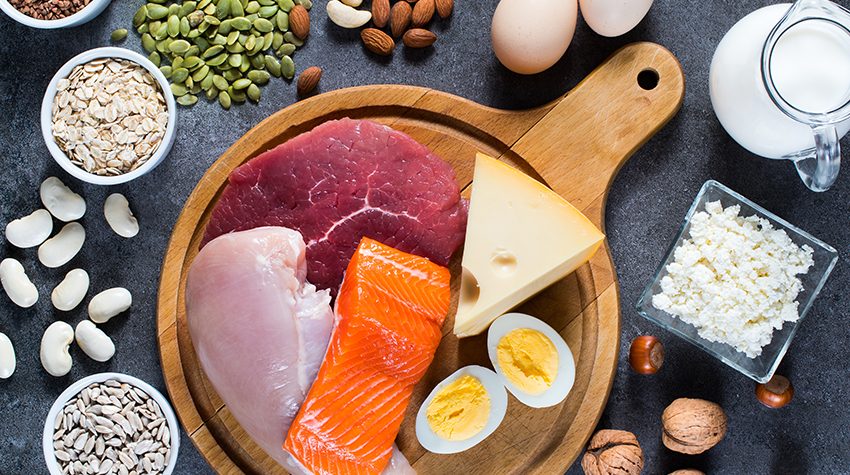
- Animal-based protein-rich foods include meat, fish and shellfish, eggs, and dairy products.
- Foods rich in plant-based protein include oilseeds (almonds, walnuts, etc.), legumes (lentils, dried beans, etc.), and grains (wheat, oats, etc.).
Please note that the nutritional quality of proteins depends on their biological value, which is determined by their essential amino acid content. The more essential amino acids a protein contains, the higher its biological value is considered to be (egg protein is the reference protein as it contains all essential amino acids).
Plant-based proteins are often of lower nutritional quality than animal proteins because they often lack one or more essential amino acids. However, the amino acid balance can be restored by combining them within the same meal. This complementarity has been used for a long time and forms the basis of the vegetarian diet, combining, for example, semolina and chickpeas or lentils and rice.
What are your protein needs?
It is recommended to consume 0.83 g of protein per kg of body weight per day. More generally, recommended intakes are estimated to range from 11 to 15% of the total caloric intake, with a minimum of 70g per day for men and 60g per day for women.
Our advice
Eat protein every day in the right proportions, namely:
– two medium servings of meat, fish, or eggs
– plus three to four dairy products, preferably skimmed and unsweetened, which also provide the calcium your skeleton needs…
– as well as plant-based proteins found in bread, starches… which also have the advantage of providing complex carbohydrates essential for good dietary balance.
But also be careful about excessive protein consumption which favors the production of organic waste such as urea and uric acid, which can lead to long-term kidney fatigue.

The nutritional benefits of proteins
Proteins, essential for our health
Proteins are one of the three major macronutrient families, along with carbohydrates and fats. They are the main components of food that contribute to the energy supply the body needs.
They are composed of long chains of amino acids, some of which can be produced by the body and others are called "essential" because they cannot be synthesized by the human body and must therefore be obtained from the diet. This is why it is important to meet your protein needs to ensure a sufficient intake of these amino acids.
Why do we need protein?
Proteins have several important roles in:
– the building and maintenance of our bones, muscles, skin, hair, nails, body hair, and cell membranes,
- the synthesis and action of our hormones and enzymes necessary for our digestion and metabolism, our neurotransmitters, and our antibodies that protect against bacterial infections,
– the transport of oxygen in the body (hemoglobin) and substances like iron, triglycerides, cholesterol, medications,
- maintaining oncotic pressure, blood clotting, the immune system...
Where are dietary proteins found?
They can be of animal or plant origin.
- Animal-based protein-rich foods include meat, fish and shellfish, eggs, and dairy products.
- Foods rich in plant-based protein include oilseeds (almonds, walnuts, etc.), legumes (lentils, dried beans, etc.), and grains (wheat, oats, etc.).
Please note that the nutritional quality of proteins depends on their biological value, which is determined by their essential amino acid content. The more essential amino acids a protein contains, the higher its biological value is considered to be (egg protein is the reference protein as it contains all essential amino acids).
Plant-based proteins are often of lower nutritional quality than animal proteins because they often lack one or more essential amino acids. However, the amino acid balance can be restored by combining them within the same meal. This complementarity has been used for a long time and forms the basis of the vegetarian diet, combining, for example, semolina and chickpeas or lentils and rice.
What are your protein needs?
It is recommended to consume 0.83 g of protein per kg of body weight per day. More generally, recommended intakes are estimated to range from 11 to 15% of the total caloric intake, with a minimum of 70g per day for men and 60g per day for women.
Our advice
Eat protein every day in the right proportions, namely:
– two medium servings of meat, fish, or eggs
– plus three to four dairy products, preferably skimmed and unsweetened, which also provide the calcium your skeleton needs…
– as well as plant-based proteins found in bread, starches… which also have the advantage of providing complex carbohydrates essential for good dietary balance.
But also be careful about excessive protein consumption which favors the production of organic waste such as urea and uric acid, which can lead to long-term kidney fatigue.

OUR OTHERS TIPS
The heat is back! You're now better prepared to face the heat, but do you know why your appetite isn't so good in these conditions? And above all, what precautions should you take with regard to your diet?
Summer is the perfect time to fill up on vitamins (A, B, C...) and minerals (magnesium, iron, zinc...). They belong to the family of micronutrients, nutrients we need in very small quantities (micrograms or milligrams) but which are nonetheless essential to our health. They must be provided by the diet, and have the advantage of being calorie-free.