Dairy products, essential for our health

separateur
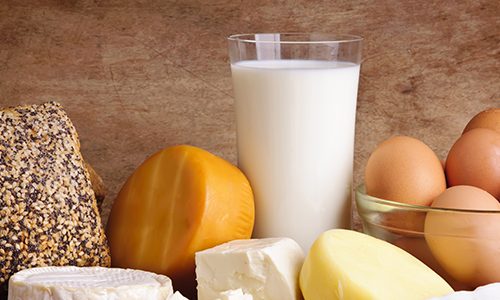
Still,Life,With,Dairy,Products,,Milk,,Eggs,,Bread,And,Cheese

You probably already know that dairy products hold an important place in the food pyramid. They are our main dietary source of calcium, which is essential for our health—especially for strong and healthy bones.

Needs


To meet our calcium needs, we should consume 3 to 4 servings of dairy products per day, for example, 3 to 4 of the following options:

  • 150 ml of semi-skimmed milk,
  • 1 plain yogurt,
  • 100 g of quark cheese,
  • 2 little Swiss cheeses,
  • 30 g of regular or low-fat cheese.

However, it is not obvious for everyone to consume a dairy product per meal as recommended by health organizations. 


How to consume dairy products in multiple, diverse, varied, fun, and appetizing ways?

  • Dairy products

Yogurts, fresh cheeses, petits-suisses… here are some ideas for consuming them in ways other than with traditional granulated sugar/jam/honey! 

– In sauces: indeed, their texture is ideal for creating smooth and light sauces, both hot and cold.

– For dips: as dinner parties are trending, you can season fromage blanc or yogurt with salt, pepper, and cilantro or chives, basil, mint according to taste, or even a spoonful of ketchup for a "cocktail" sauce, etc.

– As a spread: petit-suisse seasoned with finely chopped smoked salmon, chives, and a squeeze of lemon juice, for example.

– In a soup to make it creamy, for example, zucchini and cream cheese.

– With blended fruits, as a coulis or in pieces for a vitamin-rich dessert.

  • The cheese

When you say cheese, you often think of a cheese board with a green salad at the end of a "long" meal. Here are many ways to use it differently:

– Grated: for example on pasta, or gratinéed on zucchini

– In shavings or cubes: in a mixed salad (cubes of feta or balls of mozzarella with tomatoes, cucumbers, etc.)

– In a vegetable soup: ricotta in a cream of pea soup or The Laughing Cow cheese in a zucchini soup.

– A spread: cream cheese mixed with canned tuna, to make appetizer tuna rillettes.

  • The milk

Plain drinking milk is rarely favored by adults. How can it be made more appealing without increasing its calorie count?

– A lean cocoa: by adding a small spoonful of unsweetened, defatted cocoa, and sweetening it.

– A milkshake: blended with fruit.

– Desserts, flans,île flottante and other light milk-based recipes.


In conclusionDon't shun dairy products anymore! If you're not a fan of yogurt or cheese at the end of a meal, consider using them in your culinary creations, like our suggestions above.


Dairy productsnecessary for our health

produit_laitier-500-500-def

You probably already know that dairy products hold an important place in the food pyramid. They are our main dietary source of calcium, which is essential for our health—especially for strong and healthy bones.

Needs


To meet our calcium needs, we should consume 3 to 4 servings of dairy products per day, for example, 3 to 4 of the following options:

150 ml of semi-skimmed milk,

1 plain yogurt,

100 g of quark cheese,

2 little Swiss cheeses,

30 g of regular or low-fat cheese.


However, it is not obvious for everyone to consume a dairy product per meal as recommended by health organizations. 

How to consume dairy products in multiple, diverse, varied, fun, and appetizing ways?

  • Dairy products

Yogurts, fresh cheeses, petits-suisses… here are some ideas for consuming them in ways other than with traditional granulated sugar/jam/honey! 

In sauces: indeed, their texture is ideal for creating smooth and light sauces, both hot and cold.

For dips: as dinner parties are trending, you can season fromage blanc or yogurt with salt, pepper, and cilantro or chives, basil, mint according to taste, or even a spoonful of ketchup for a "cocktail" sauce, etc.

As a spread: petit-suisse seasoned with finely chopped smoked salmon, chives, and a squeeze of lemon juice, for example.

In a soup to make it creamy, for example, zucchini and cream cheese.

With blended fruits, as a coulis or in pieces for a vitamin-rich dessert.

  • The cheese

When you say cheese, you often think of a cheese board with a green salad at the end of a "long" meal. Here are many ways to use it differently:

Grated: for example on pasta, or gratinéed on zucchini

In shavings or cubes: in a mixed salad (cubes of feta or balls of mozzarella with tomatoes, cucumbers, etc.)

In a vegetable soup: ricotta in a cream of pea soup or The Laughing Cow cheese in a zucchini soup.

A spread: cream cheese mixed with canned tuna, to make appetizer tuna rillettes.

  • The milk

Plain drinking milk is rarely favored by adults. How can it be made more appealing without increasing its calorie count?

A lean cocoa: by adding a small spoonful of unsweetened, defatted cocoa, and sweetening it.

A milkshake: blended with fruit.

Desserts, flans,île flottante and other light milk-based recipes.

In conclusionDon't shun dairy products anymore! If you're not a fan of yogurt or cheese at the end of a meal, consider using them in your culinary creations, like our suggestions above.
OUR OTHERS TIPS

Who hasn't taken a trip to the harbour, for a fish auction at their vacation destination, or early in the morning to get fish fresh out of the water? Fish, shellfish and crustaceans are the stars of summer dishes.

The heat is back! You're now better prepared to face the heat, but do you know why your appetite isn't so good in these conditions? And above all, what precautions should you take with regard to your diet?

Summer is the perfect time to fill up on vitamins (A, B, C...) and minerals (magnesium, iron, zinc...). They belong to the family of micronutrients, nutrients we need in very small quantities (micrograms or milligrams) but which are nonetheless essential to our health. They must be provided by the diet, and have the advantage of being calorie-free.